
In bio-organic fertilizer production, the addition of functional microbial agents is the most technically demanding step. Low agent survival rate, uneven distribution, and difficulty in colonization are three major pain points that have long plagued the industry. This article analyzes the key technologies for achieving precise microbial addition from three dimensions: agent pretreatment, addition equipment, and process control.
What is the Precision Control of Microbial Addition in Bio-organic Fertilizer?
Precision control of microbial addition in bio-organic fertilizer refers to the systematic management of key parameters such as the amount added, uniformity of distribution, maintenance of strain activity, and colonization efficiency during the process of adding functional microbial agents to organic fertilizer substrate. According to industry standard NY/T 798-2015, the effective viable bacteria count in bio-organic fertilizer products should be ≥0.2 billion/gram, while advanced companies typically require ≥100 million/gram in their internal control standards.
Accurate control of inoculum addition includes three core indicators:
Metering accuracy:The deviation in the added amount is controlled within ±5% of the set value.
Distribution uniformity:Coefficient of variation (CV) ≤ 15%.
Survival rate:The survival rate of strains in the finished product ≥ 90%.
Control Point One: Inoculum Pretreatment and Activation
2.1 Inoculum Screening and Activation
Pre-inoculation preparation is the foundation for efficient inoculum addition. After screening suitable inoculum based on functional objectives, activation treatment is required: By optimizing the culture medium composition and controlling temperature (25-37℃), pH (5.5-8.5), and aeration conditions, the activity of the strains is enhanced to its optimal state.
Key Parameters:
Activated microbial agents should be added within 4-6 hours to avoid activity decay.
Carrier Selection: Organic carriers must have a compostability of over 80% and a C/N ratio of 15-25:1; inorganic carriers must be pulverized to 0.1-1mm and have a moisture content controlled at 10-15%.
2.2 Microbial Agent Propagation and Compounding
A three-stage amplification premixing strategy is adopted to solve the problem of uniformity in micro-addition:
Mix 1 part microbial agent with 10 parts carrier (such as bran, peat moss).
Mix the above 11 parts material with 100 parts organic material.
Finally, add to the batch fermentation or mixing system.
The microbial agent technology developed by Nanjing University of Technology contains 1 billion live bacteria per gram of product (the national standard requires only 200 million/gram), significantly improving addition efficiency through optimized microbial community combination.
III. Control Point Two: Key Technical Requirements of the Microbial Addition Device
3.1 Precise Metering Components
Traditional microbial addition mechanisms generally use manual feeding or simple screws, resulting in large metering errors and discontinuous processes. The core of modern precision microbial dosing devices is the dosage component—employing a metering screw paired with a micro-metering screw pump to achieve continuous and precise control of the dosage.
Technical Requirements:
Metering screw accuracy: ±2%
Dosing speed adjustment range: 10%-100% steplessly adjustable
Compatible with different flowability microbial agents (powder, liquid)
3.2 Multi-stage stirring and mixing system
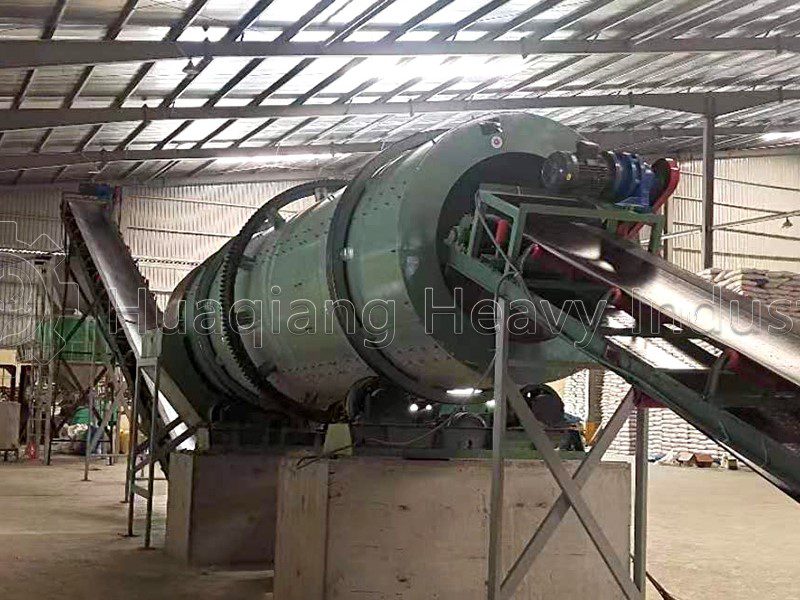
To ensure sufficient contact between the microbial agent and organic materials, modern microbial dosing devices are typically designed with two or more stages of stirring systems:
First-stage stirring: The microbial agent is pre-mixed with a portion of the base material to form a uniformly dispersed microbial agent-carrier mixture.
Second-stage stirring: The premixed material is mixed with the main material to achieve overall uniformity.
With corresponding pulverizing components, the organic materials are pulverized to a suitable fineness (usually requiring passage through a 40-mesh sieve), further improving the uniformity of microbial agent distribution.
3.3 Industry Breakthrough Case: Compound Fertilizer “Fertilizer-Carrying Microorganisms”
The contradiction between the high-salt environment of compound fertilizers and the survival of microorganisms was once a globally recognized challenge in the industry. Xinyangfeng collaborated with Li Peiwu’s team at the Chinese Academy of Agricultural Sciences, conducting in-depth research on key factors affecting microbial agent activity. Through hundreds of experiments involving isolating agents, survival preservatives, and activators, they ultimately overcame the technical bottlenecks related to the compatibility of compound fertilizers with microorganisms, activity retention, and short-lasting fertilizer effectiveness, ensuring a microbial agent survival rate of over 90%.
Control Point Three: Process Parameters and Process Management
4.1 Temperature and Humidity Control
Environmental conditions during the inoculant addition process directly affect the survival rate:
The material temperature should be ≤40℃ during addition (temperatures exceeding 50℃ will cause a large number of strains to die).
Environmental humidity should be controlled at 60%-70% to prevent the inoculant from absorbing moisture and clumping.
4.2 Timing of Addition
Depending on the fermentation stage, inoculant addition can be divided into two modes:
Pre-fermentation addition: The inoculant is mixed with the raw materials before entering the fermentation tank (suitable for heat-resistant strains).
Post-fermentation addition: Functional inoculants are added after fermentation and decomposition (suitable for heat-sensitive functional bacteria, such as nitrogen-fixing bacteria and phosphate-solubilizing bacteria).
Post-inoculation maintenance and management are equally crucial: During fermentation, parameters such as temperature, humidity, and pH need to be continuously monitored to prevent high temperatures (>65℃) from causing bacterial death. Carbon or nitrogen sources can be supplemented as needed by the microorganisms, and the C/N ratio can be adjusted to maintain metabolic activity.
According to industry practice, bio-organic fertilizer production lines equipped with a precision microbial addition system can maintain a stable effective live bacteria count of 100-500 million per gram, increasing microbial agent utilization by 30%-50%. For companies targeting the high-end market, this is a key investment for establishing product differentiation and technological barriers.
Microbial Precision as the Bio-Organic Differentiator
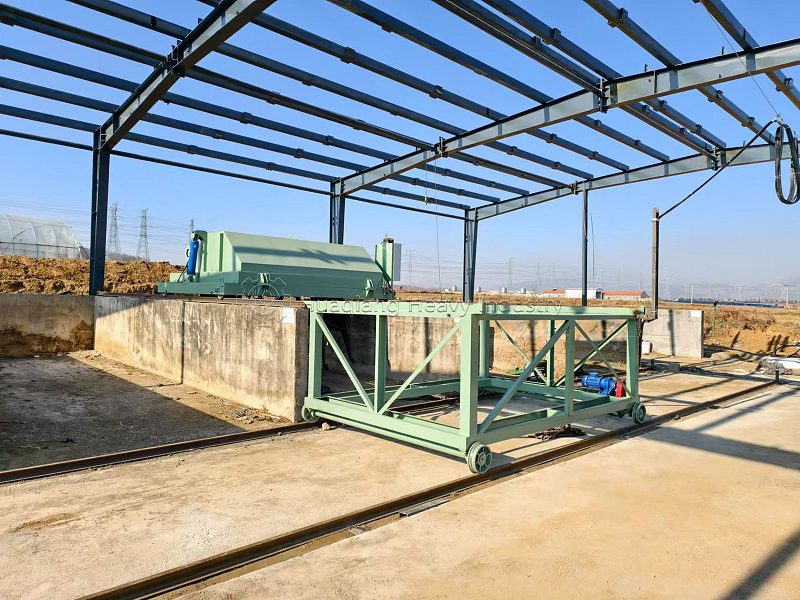
Achieving ≥90% microbial survival and ≤15% distribution CV is not merely a technical milestone—it is the biological guarantee that transforms a conventional organic fertilizer into a premium bio-organic product commanding market premiums. In a modern bio organic fertilizer production line, this precision begins upstream with advanced fermentation composting turning technology: a large wheel compost turner ensures uniform oxygen distribution across expansive windrow sites, while a trough-type compost turner implementing fermentation composting technology for organic fertilizer maintains the 55-65°C thermophilic window for pathogen inactivation without overheating sensitive microbial habitats. An integrated agriculture waste compost fermentation machine ecosystem captures and treats odorous emissions, converting waste liabilities into stabilized substrate. Post-fermentation, precision microbial dosing—metering at ±2% accuracy with multi-stage stirring—ensures that activated strains are dispersed uniformly before entering the disc granulation production line, where low-temperature pelletizing preserves viability. Manufacturers that master this end-to-end control—from compost turning and thermal management through precision inoculation and gentle granulation—establish the technological barriers and product differentiation that define leadership in the high-end bio-organic market.