
Industry Status: Demand Transformation and Supply Restructuring
The global fertilizer market is undergoing profound changes in 2026. The growth rate of traditional bulk nitrogen, phosphorus, and potassium products is slowing, while high-end categories such as biostimulants, water-soluble fertilizers, and controlled-release fertilizers are experiencing a compound annual growth rate of 8% to 12%. Following the Russia-Ukraine conflict, the regionalization of the supply chain is evident, with Africa, Southeast Asia, and South America becoming hotspots for new production capacity. At the same time, stricter environmental regulations are accelerating the exit of small and medium-sized enterprises, increasing market concentration—the market share of the top ten companies has risen from 35% in 2020 to 45%. This means that untapped areas and niche markets are opening up to prepared new entrants.
Policy Dividends: Entry Subsidies under Green Transition
Many countries are incorporating the fertilizer industry into their agricultural security and circular economy frameworks. The EU’s 2026 revised Fertilizer Product Regulation opens a fast track for bio-based and recycled nutrient-source fertilizers; India and Indonesia offer investment subsidies of 15% to 30% for domestically built organic fertilizer equipment; and the US Inflation Reduction Act extends to low-carbon fertilizer production facilities, offering tax credits. Furthermore, global carbon border adjustment mechanisms are gradually incorporating chemical fertilizers into their accounting, making low-carbon processes a hidden competitive advantage for new factories. This policy window is expected to last 3 to 5 years, and newcomers who accurately identify the directions of bio-organic fertilizers and waste resource utilization can gain a cost advantage in the initial stage.
Three core hurdles for newcomers: Technical hurdle—High-end fertilizer production is not simply “crushing + mixing.” Processes such as controlled-release coating, preservation of live microorganisms, and multi-element chelation require interdisciplinary knowledge. Newcomers often underestimate the formulation debugging cycle: a stable water-soluble fertilizer takes an average of 6 to 12 months from laboratory to mass production, with trial and error costs reaching $50,000 to $150,000. It is recommended to shorten the learning curve through technology licensing or cooperation with established laboratories.
Capital Threshold – The minimum investment for a 5-ton-per-hour compound fertilizer production line has risen to $250,000 (including environmental protection facilities), and a large amount of working capital is required for raw material procurement. A common mistake for newcomers is to invest all their funds in equipment while neglecting the initial purchase cost of 300 to 500 tons of raw materials (approximately $60,000 to $120,000). It is recommended to build the line in stages: first, launch a powder production line to recoup capital, then gradually invest in granulation and coating units.
Distribution Channel Threshold – Fertilizer is a low-frequency repurchase product, and agricultural input dealers are extremely cautious about unfamiliar brands. Even if a newcomer’s product is qualified, they may face difficulties in distribution and long payment terms (90 to 120 days). There are two ways to overcome this: one is to establish direct supply relationships with large-scale planting bases; the other is to undertake overseas OEM manufacturing to build production reputation. Avoid blindly starting production without orders.
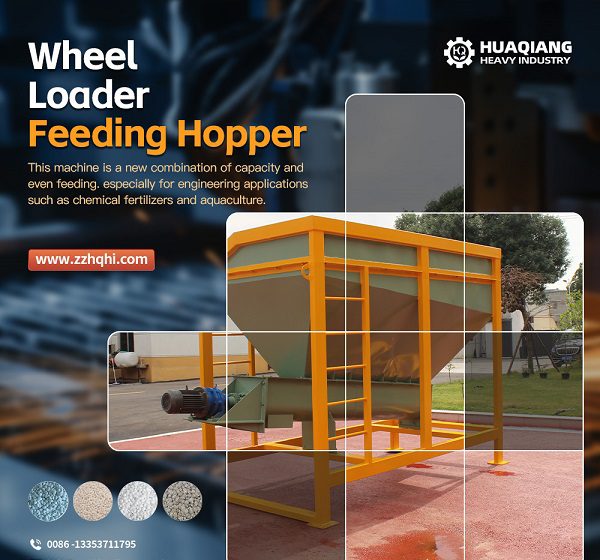
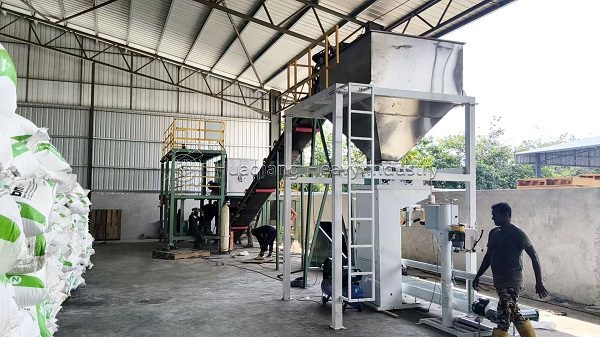
For aspiring entrants navigating the transformed 2026 fertilizer landscape, strategic equipment procurement and phased capacity expansion represent the most prudent path to sustainable market presence. When evaluating industrial fertilizer machine price, newcomers must adopt a total-cost-of-ownership perspective that encompasses not only the core fertilizer granulator machine but also the upstream fertilizer crusher and mixer for consistent feedstock preparation, the downstream fertilizer dryer and cooler for thermal stabilization, and precision fertilizer screening equipment for quality classification. A phased approach—starting with powder blending before adding extrusion or drum granulation—allows entrepreneurs to validate formulations and secure distributor relationships while conserving capital. Every piece of fertilizer equipment must be selected with modularity in mind, enabling seamless upgrades from basic powder lines to value-added pellet or coating operations as market traction builds. The final link, an automatic fertilizer packing machine, ensures retail-ready presentation and traceable batch weights that meet export standards. By aligning equipment investments with policy windows, technical partnerships, and disciplined channel development, new entrants can transform the industry’s current restructuring turbulence into a launchpad for long-term competitive advantage in the green fertilizer economy.
We offer modular equipment solutions and phased investment plans, from powder production lines to controlled-release fertilizer production lines. We can also customize technology licensing and capacity ramp-up plans free of charge according to your target market and regional policies, helping you overcome the triple barriers of technology, capital, and channels with minimal trial and error costs, and steadily enter the fertilizer market opportunity window of 2026.