
The challenge in granulating organic-inorganic compound fertilizers lies in the physical incompatibility between the high moisture content (40%-60%) of organic matter and the low moisture content (3%-5%) of inorganic salts. Through a synergistic granulation technology involving stepwise premixing, steam conditioning, and extrusion molding, the pelleting rate can be increased from 55% in a single process to 88%, while simultaneously achieving a slow-release structure where organic matter encapsulates the inorganic core.
Definition First: Synergistic granulation technology refers to the process of compounding organic materials and inorganic fertilizers according to specific time sequences and process parameters, enabling two raw materials with vastly different physicochemical properties to form stable aggregates at the granular level. Its core challenge lies in the compatibility of the viscoelasticity of organic matter and the brittleness of inorganic salts within the granulation window.
I. Why is organic + inorganic not simply a mixture? The Inherent Physical Incompatibility: Organic materials (livestock manure, biogas residue, straw charcoal) have a moisture content of 40%-60% and high fiber content, easily forming clumps that stick to the walls of a drum granulator. Inorganic fertilizers (urea, ammonium phosphate, potassium chloride) have a moisture content of <<5%, high particle hardness, and lack the liquid phase binding required for granulation. If directly blended, the organic matter encapsulates the inorganic particles, forming a “half-baked” structure—the outer layer of organic matter is not fully decomposed, leading to seedling burn, while the inner layer of inorganic salts is not slowly released, resulting in nutrient loss. According to the website’s process database, the compressive strength of the finished granules from simple mixing and granulation is only 8-12N, far below the 15N required by the NY 884 standard.
The Sequential Logic of Co-granulation: Step 1: Pre-drying and pulverizing of organic matter. Reduce the moisture content of the organic material from 60% to 25%-30%, and pulverize the particle size to <<3mm. In the pretreatment process described on the website, this step uses a series configuration of a semi-wet material crusher and a rotary drum dryer, with the drying temperature controlled at 120-150℃ to prevent organic matter carbonization.
Step Two: Inorganic Salt Steam Conditioning. The inorganic raw materials are preheated to 45-55℃ in a twin-shaft mixer with steam at 0.3-0.4MPa, forming a micro-molten liquid phase on the surface. Referring to the NPK granulation parameters on the website, this temperature window creates a 0.5-1μm molten layer on the urea surface, serving as an “anchor point” for subsequent organic matter bonding.
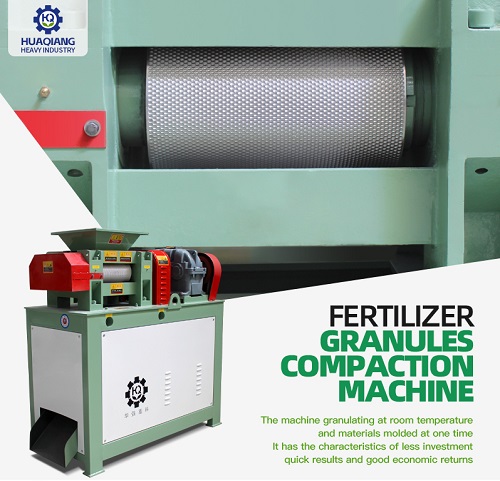
Step Three: Gradient Extrusion Molding. A double roller press granulator is used. The inorganic core is first pre-compressed at 20-22MPa, and then the organic coating layer is extruded a second time at 15-18MPa. According to the twin-roll granulator specifications on the website, this gradient pressure design increases the organic-inorganic interface bonding strength to 18-22N, a 40% improvement compared to single-layer extrusion.
II. Critical Point Control of Steam Conditioning The amount of steam added is the “golden parameter” for co-granulation. When the organic matter moisture content is 25%, adding 8-12 kg of steam per ton of mixture is sufficient to activate interfacial bonding; excessive steam (>15 kg) leads to excessive granule moisture content (>10%), causing a surge in drying energy consumption; insufficient steam (<<6 kg) causes separation of organic matter from the inorganic core, resulting in a finished product pulverization rate exceeding 15%. According to the website’s heavy equipment operation records, steam pressure stability (fluctuation << ±0.05 MPa) is more important than the absolute pressure value—pressure pulsation leads to uneven particle density, causing particle size deviations of over 20% during sieving.
Co-Granulation as the Bridge Between Organic and Mineral Nutrition
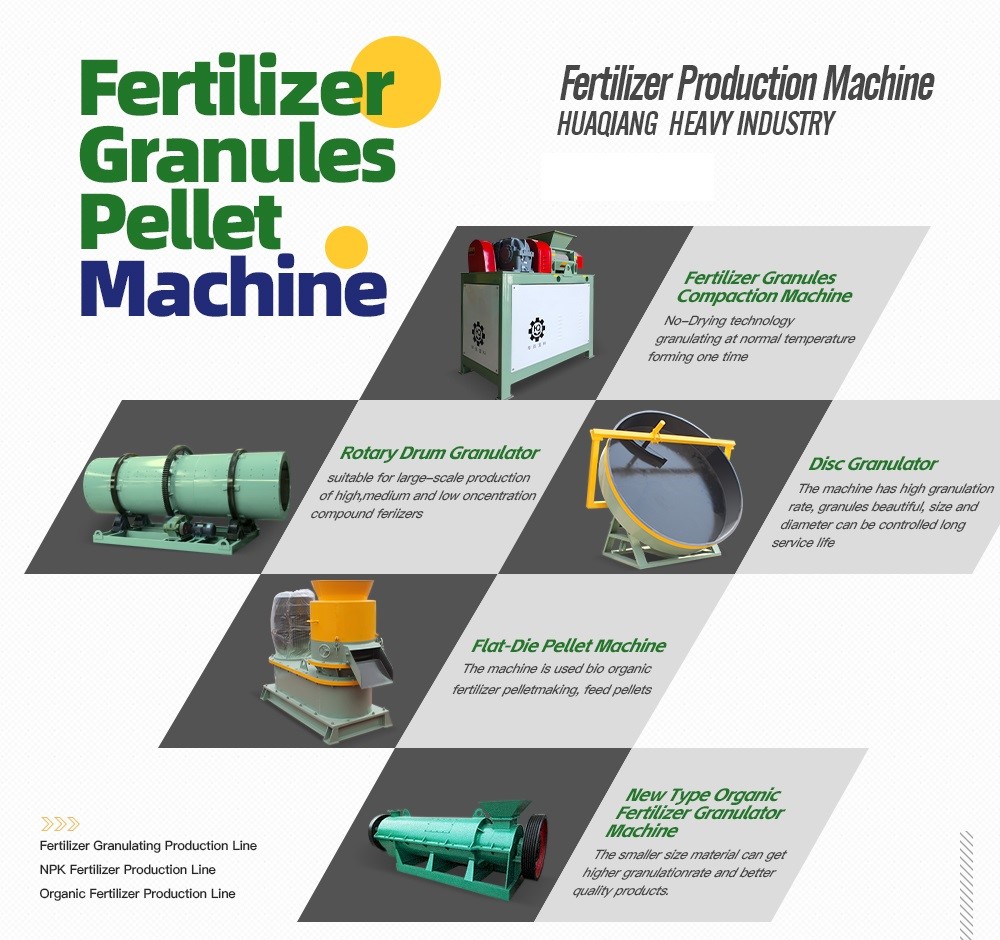
The synergistic granulation technology that elevates pelleting rates from 55% to 88% is not merely a process improvement—it is the engineering foundation for next-generation compound fertilizers that reconcile soil health with yield intensity. In a modern npk fertilizer production line or npk fertilizer manufacturing process, this sequential premixing-steam-conditioning-extrusion approach transforms the fertilizer compactor from a simple densification tool into a precision bonding platform where organic matter encapsulates inorganic cores with 18-22N interfacial strength. For facilities already running fertilizer granules compaction via dry roller pressing, integrating organic preconditioning modules—reducing moisture from 60% to 25-30% and pulverizing to ≤3mm—enables seamless co-processing without retrofitting the entire rotary drum granulator infrastructure. Meanwhile, an organic fertilizer granulator series designed for low-temperature, high-fiber substrates can adopt the same gradient pressure logic: a flat die pelleting machine or compact fertilizer compactor first forms the inorganic nucleus, followed by organic coating extrusion at reduced pressure to preserve microbial viability. For regional blenders, a high-throughput npk bulk blending machine downstream dynamically fortifies these co-granules with micronutrients, creating custom slow-release formulations for specific crop growth stages. Whether the front-end is a steam-conditioned rotary drum granulator or a dry fertilizer compactor, the plants that lead the 2026 organic-inorganic market are those that treat organic fertilizer production granulation not as a mixing challenge but as a structured materials science problem—engineering interfacial bonding, controlling coating thickness, and matching release kinetics to agronomic demand.
FAQ (Frequently Asked Questions)
Q1: What is the upper limit of organic matter content in organic-inorganic compound fertilizer?
The NY 884 standard stipulates that an organic matter content ≥20% is sufficient to be called organic-inorganic compound fertilizer. However, from a granulation process perspective, when the organic matter content exceeds 35%, the particle strength drops sharply. It is recommended to control it within the 20%-30% range, adjusting the slow-release period through coating thickness.
Q2: Is a two-roller extruder necessary for co-granulation?
It’s not the only option. For formulations with an organic matter content of <<20%, a drum granulator is also suitable, but the organic matter should be used as a return core rather than a coating layer. In this case, the pelleting rate is approximately 75%-80%, lower than the 88% of two-roller gradient extrusion, but the investment cost is reduced by 35%.
Q3: How is the slow-release period of co-granulated pellets controlled?
It is controlled by combining the thickness of the organic matter coating layer (0.5-2mm) with the degree of organic matter decomposition. Highly decomposed organic matter (humification coefficient >50%) has low porosity, resulting in a slow-release period of 30-45 days; semi-decomposed organic matter has high porosity, resulting in a slow-release period of 15-25 days. It is recommended to match the release period according to the crop’s growth stage requirements.